If you have ever tried to teach “place” on a fluffy bed or a rug, you already know the problem. The edges are vague, the dog drifts half on and half off, and you are never quite sure whether to reward. A dog training platform or a raised place cot fixes that in one move. It gives your dog a firm, clearly defined spot with obvious edges, which makes the whole cue easier to teach and easier to understand.
This guide covers what a place cot actually is, how cots compare with mats and training platforms, how to pick the right size and build for your dog, and six real products worth a look. You will also find a short, reward-based method for teaching “place” from scratch, plus the mistakes that slow most owners down.
We may earn a commission when you buy through links on this page, at no extra cost to you.
The Short Version
A dog training platform or place cot is a raised, firm surface with clear edges that your dog learns to go to and stay on when you give the “place” cue. The raised edge makes it obvious to your dog when all four paws are on and when they have stepped off, so rewards land at the right moment. Choose a cot whose sleeping surface is your dog’s body length plus about 4 to 6 inches, with a weight limit well above your dog’s weight. Pick chew-resistant frames for chewers and a breathable mesh cot for outdoor use.
What a Place Cot Is and Why It Helps
A place cot is an elevated bed, usually a fabric sling stretched over a metal or PVC frame, standing a few inches off the floor. A dog training platform is a close cousin: a rigid, raised base made of molded plastic or a similar hard material, often with a grippy top and adjustable legs. Both serve the same training job. They give your dog a single, clearly bounded target to go to, settle on, and stay on until you release them.
The key is the edge. On a flat mat, a dog can have three paws on and one hanging off, and it is hard for either of you to tell whether that counts. A raised cot has a definite boundary. Your dog can feel the step up and the step down, so the difference between “on” and “off” becomes obvious. That clarity matters in reward-based training, because your dog learns fastest when the rule is simple and the reward comes at the exact moment they get it right. Clear edges make it easy for a dog to know when they are on or off, and easy for you to mark and reward the correct choice.
The height adds a second benefit. Stepping up onto something is a deliberate action, so going to place feels like a distinct behavior rather than wandering onto a rug. Many owners also find that the raised surface becomes a calm, predictable spot that the dog chooses on its own during the day. That makes a cot useful well beyond formal training: for doorbell manners, mealtimes, guests, grooming, and simply giving a busy dog a job that means “relax here.”
Cot, Mat, or Platform: How They Compare
All three can work for teaching place. The right one depends on how clear you need the boundary to be, how much your dog chews, and whether you want something to sleep on or something to train on. The table below sums up the practical differences.
| Feature | Elevated Cot | Flat Mat | Training Platform |
|---|---|---|---|
| Edge clarity | High: raised frame creates a clear on and off | Low: edges are soft and easy to half cover | Very high: rigid, raised, and defined |
| Comfort for long settles | Good: hammock sling supports joints | Good on soft floors, depends on padding | Fair: firm surface, best for shorter sessions |
| Portability | Moderate: some fold or break down | Excellent: rolls up anywhere | Good: light, legs often detach |
| Chew resistance | Varies: best models hide fabric edges | Low: most fabric mats are easy to chew | High: molded plastic gives little to grab |
| Outdoor use | Excellent with mesh fabric | Poor: absorbs water and dirt | Excellent: waterproof and washable |
| Best for | Everyday place and a daily bed | Travel and generalizing place | Precise training, confidence, and agility basics |
A common plan is to start with a cot or platform, where the boundary is crystal clear, and later add a flat mat for travel once your dog fully understands the cue. By then your dog already knows what “place” means, so the softer edges of a mat are less confusing.
Our Picks at a Glance
These six products were chosen for their design, materials, sizing options, and consistent patterns in owner reviews. They cover everyday cots, heavy-duty options for chewers, and dedicated training platforms.
| Pick | Best For | Key Feature |
|---|---|---|
| Coolaroo The Original Cooling Elevated Pet Bed | Best overall | Breathable HDPE fabric on a powder-coated steel frame |
| Blue-9 KLIMB Dog Training Platform | Dedicated training platform | Grippy molded top with modular, linkable design |
| Kuranda Chewproof Elevated Dog Bed | Moderate chewers | Fabric edges tucked inside the frame |
| K9 Ballistics Chew Proof Elevated Cot Bed | Heavy chewers and big dogs | All-aluminum frame rated to 250 lb stationary weight |
| Veehoo Outdoor Elevated Dog Cot Bed | Best value | Washable mesh sling with no-slip feet |
| FitPAWS Giant K9FITbone | Small spaces and balance work | Inflatable, portable, bone-shaped platform |
The Best Dog Training Platforms and Place Cots
Each pick below includes who it suits and what to watch for. Sizes vary by listing, so measure your dog first using the guide in the How to Choose section further down.
Best Overall
Coolaroo The Original Cooling Elevated Pet Bed
The Coolaroo has been a go-to place cot for years because it gets the basics right. A powder-coated steel frame holds a taut, breathable HDPE fabric off the floor, which gives your dog a firm, clearly raised surface that is easy to target. It comes in several sizes and colors, works indoors or out, and the fabric resists mildew, so it suits most households looking for one cot that does everything.
What We Like
- Clear raised edge that makes on and off easy for your dog to read.
- Breathable fabric that stays cool and dries quickly outdoors.
- Replacement covers are sold separately, so the frame can outlast the fabric.
- Wide range of sizes from small to extra large.
Keep in Mind
- Not chew-resistant; the fabric edges are reachable for determined chewers.
- Owners report assembly can be fiddly and sometimes takes two people.
- The woven fabric feels a little stiff, so some dogs prefer a thin pad on top.


Best Dedicated Training Platform
Blue-9 KLIMB Dog Training Platform
The KLIMB is built for training rather than sleeping, and that focus shows. Its molded, waterproof body has a soft-touch PawGrip surface for secure footing, and the QuiKonnect locking tabs let you link several units together as your training grows. The legs store in a recessed compartment underneath, which makes it easy to carry to class, the park, or a friend’s house to practice place in new locations.
What We Like
- Very defined edges and a firm top, ideal for precise “place” and “stay” work.
- Washable and waterproof, so it handles mud and outdoor sessions.
- Modular design that grows into agility and confidence games.
- Made in the USA.
Keep in Mind
- A firm training surface, not a comfortable bed for long naps.
- One unit may feel small for giant breeds lying fully stretched out.

Best for Moderate Chewers
Kuranda Chewproof Elevated Dog Bed
Kuranda beds are designed so the fabric edges sit inside the frame, leaving little for a dog to grab and shred. This version uses a PVC frame with tough Cordura nylon, and the brand lists its standard PVC beds for dogs up to 100 pounds, with aluminum models rated higher. It is a sensible choice for a young dog who tests things with their teeth and needs a place cot that will survive the learning phase.
What We Like
- Recessed fabric design that discourages chewing at the edges.
- Many frame, fabric, and size combinations, including crate-sized beds.
- Made in the USA, with a chew-proof warranty offered by the brand.
Keep in Mind
- PVC frames are lighter duty than aluminum; very strong chewers may need the aluminum version.
- The many listing options make it easy to order the wrong size, so double-check dimensions.

Best for Heavy Chewers and Big Dogs
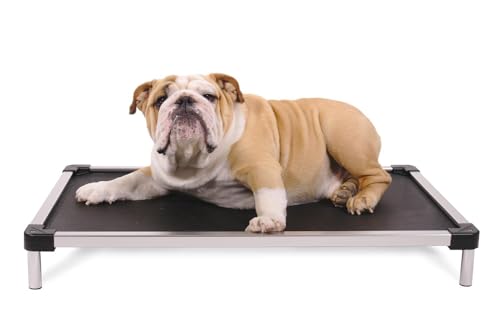
K9 Ballistics Chew Proof Elevated Cot Bed
For large, strong, or destructive dogs, the K9 Ballistics cot is one of the sturdiest options available. It uses an all-aluminum frame with aluminum corners and a ripstop or mesh sling, and the brand rates it to 250 pounds of stationary weight. It arrives preassembled with hand-screw legs and rubber feet, and the brand sizes it by weight, from small dogs under 30 pounds up to an XXL for dogs over 100 pounds.
What We Like
- Heavy-duty aluminum frame that resists bending under big dogs.
- Fabric tucked into the frame to frustrate chewing.
- Comes preassembled, with clear weight-based sizing.
- A one-year chew-proof warranty is offered by the brand.
Keep in Mind
- A premium option compared with basic steel-framed cots.
- The brand notes water can seep through the fabric over time when left out in rain.
Best Value
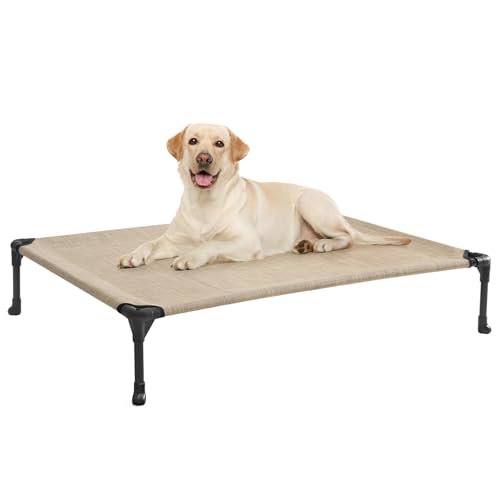
Veehoo Outdoor Elevated Dog Cot Bed
Veehoo’s cot is a popular choice for owners who want a functional place cot without paying for heavy-duty chew protection. It pairs a lightweight frame with a washable, breathable mesh sling and no-slip feet that help it stay put on hard floors. Owners often use it as both a training platform and an everyday outdoor bed, and the range runs from small to extra large.
What We Like
- Breathable mesh that suits warm weather and outdoor use.
- No-slip feet that reduce sliding during enthusiastic jumps onto the cot.
- Broad size range, including a small version for little dogs.
Keep in Mind
- The standard mesh model is not built for dedicated chewers.
- Assembly is required and the frame feels lighter than premium aluminum cots.
Best for Small Spaces and Balance Work
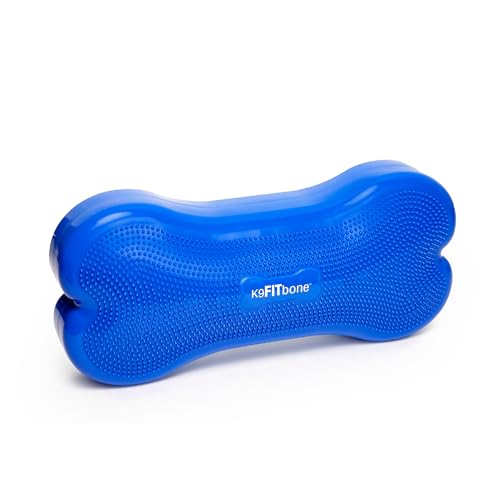
FitPAWS Giant K9FITbone
The K9FITbone is an inflatable, bone-shaped platform designed for canine fitness, and it also works well as a portable place target. Because it is raised and has an obvious shape, dogs quickly understand where it starts and ends. It deflates for storage, which makes it a good fit for apartments, and it adds a gentle balance challenge that many owners use for short confidence and body-awareness games.
What We Like
- Clear, distinctive outline that dogs learn to target fast.
- Deflates and packs away easily for small homes or travel.
- Doubles as fitness and balance equipment.
Keep in Mind
- The slightly wobbly surface suits short sessions better than long settles.
- Not suitable for chewers, and claws can be hard on it, so supervise use.
- Ask your vet before balance work if your dog has joint or mobility issues.
How to Choose a Dog Training Platform or Place Cot
The best place cot is the one your dog can lie on comfortably, cannot easily destroy, and that fits where you will actually use it. Work through these factors in order and the choice usually becomes obvious.
Size: Measure Your Dog First
Measure your dog from the tip of the nose to the base of the tail while they stand. Then add a few inches, roughly 4 to 6, so your dog can lie on their side or curl up without hanging over the edge. A cot that is too small makes settling uncomfortable, and a dog who is uncomfortable will not hold “place” for long. A cot that is far too large blurs the boundary you are trying to teach. Use the chart below as a starting point and compare it against the sleeping surface listed by the brand, not the outer frame size.
| Dog’s Body Length (Nose to Base of Tail) | Look for a Sleeping Surface of About | Typical Dogs |
|---|---|---|
| Up to 18 inches | 22 to 24 inches long | Toy and small breeds |
| 19 to 24 inches | 28 to 30 inches long | Small to medium breeds |
| 25 to 30 inches | 34 to 36 inches long | Medium breeds |
| 31 to 36 inches | 40 to 42 inches long | Large breeds |
| 37 inches and up | 46 inches long or more | Giant breeds |
Weight Limit and Frame Strength
Check the weight rating and choose one comfortably above your dog’s adult weight. Dogs do not lower themselves gently onto a cot every time. They jump on, spin, and flop, which loads the frame more than standing weight alone. Steel and aluminum frames generally handle big dogs better than lighter PVC, and aluminum adds rust resistance for outdoor use.
Chew Resistance
If your dog chews, look for designs where the fabric edge is recessed into the frame so there is nothing to grab. Kuranda and K9 Ballistics both use this approach. Even a “chew-proof” cot is not a substitute for supervision and plenty of appropriate chew toys, so manage access while your dog is learning.
Indoor or Outdoor Use
For decks, patios, and yards, choose breathable mesh or HDPE fabric on a rust-resistant frame. These dry quickly and stay cooler in summer. For indoor use, look for no-slip feet that will not slide on hardwood or tile. A cot that skids when your dog jumps on can startle them and make the spot feel less safe.
Portability and Storage
If you plan to practice place in new locations, such as cafés, a training class, or a friend’s house, portability matters. Platforms with detachable legs and inflatable options pack down easily. Fixed frame cots are better as a permanent station at home. Many owners eventually own two: a sturdy cot in the living room and a light, portable option for outings.
Height and Ease of Access
Most cots stand around 4 to 8 inches off the floor. That is enough to create a clear boundary without being hard to climb. For puppies, small dogs, and older dogs, a lower cot is easier to step onto. If your dog has joint concerns, ask your vet whether a raised cot or a firm platform is a good fit.
How to Use It in Training: Teaching Place Step by Step
This reward-based method uses treats and a marker word, such as “yes,” to tell your dog exactly when they got it right. Keep sessions short, about three to five minutes, and finish while your dog is still keen.
-
Step 1: Make the Cot a Great Place to Be
Set the cot in a quiet spot and let your dog explore it. Each time they sniff it, put a paw on it, or step up, mark and drop a treat right on the cot. You want your dog to think the cot is where good things happen before you ask for anything.
-
Step 2: Lure All Four Paws On
Hold a treat in front of your dog’s nose and guide them up onto the cot. The moment all four paws are on, mark and reward on the cot. Toss a treat off the cot to reset them, then repeat. The clear edge makes it easy for you to see when all four paws are up.
-
Step 3: Fade the Lure and Add the Cue
After a few successful repetitions, use the same hand motion without a treat in it and reward from your other hand. Once your dog is stepping up reliably, say “place” just before you point. Over several sessions, the word starts to predict the action.
-
Step 4: Reward the Down
When your dog is on the cot, wait. Many dogs will offer a down on their own. Mark and reward it generously, placing treats between their front paws. If your dog does not lie down, you can ask for a down they already know, then reward. A relaxed down is the heart of a useful place.
-
Step 5: Build Duration Slowly
Start with just a few seconds, then reward while your dog is still lying calmly. Gradually stretch the time between rewards. Always release your dog with a clear word like “free” so they learn that place lasts until you say it is over, not until they decide.
-
Step 6: Add Distance and Distractions
Once your dog will settle for 30 seconds or more, start sending them from a step away, then from across the room. Next, add small distractions such as you sitting down, a knock on a table, or a family member walking by. Raise only one challenge at a time, and make it easier again if your dog gets up.
When your dog understands place on the cot at home, practice in different rooms and outdoors, then move the cot to the spot where you need it most, such as near the front door. That is where the cot starts paying for itself in calmer greetings and quieter dinners.
Common Mistakes to Avoid
Most problems with place training come down to a few predictable habits. Fixing them usually makes a bigger difference than buying different gear.
- Using place as punishment. Sending your dog to the cot to “think about what they did” turns it into a place they want to avoid, so keep it positive every time.
- Adding duration too fast. Jumping from five seconds to five minutes sets your dog up to fail, so build time in small steps and reward often.
- Forgetting the release word. If your dog decides when place ends, the cue loses meaning, so always end with a clear release.
- Choosing a cot that is too small. A dog who cannot stretch out will not settle comfortably, so size up by your dog’s length plus a few inches.
- Rewarding off the cot. Delivering treats on the floor teaches your dog to leave, so place rewards on the cot whenever your dog is holding position.
- Skipping supervision with chewers. Even tough cots can be damaged, so stay nearby until your dog treats the cot as a bed rather than a toy.
Frequently Asked Questions
Here are quick answers to the questions owners ask most often about place cots and training platforms.
What Is the Difference Between a Place Cot and a Regular Dog Bed?
A place cot is raised and firm with clear edges, while most regular beds are soft and shapeless. Those clear edges help your dog understand exactly where “place” begins and ends. Many cots also work as everyday beds once your dog has learned the cue.
How Long Does It Take to Teach a Dog Place?
Many dogs learn to step onto the cot on cue within a few short sessions. Building a calm, reliable stay with distractions usually takes a few weeks of daily practice. Short, frequent sessions work better than long ones.
Can I Use a Place Cot for a Puppy?
Yes. Choose a low cot that is easy for a puppy to step onto, and keep sessions very short. If your puppy chews, pick a model with recessed fabric edges and supervise closely.
Should the Place Cot Go in the Crate?
Some cots are sized to fit inside wire crates, and that can work well. Many owners prefer to keep the place cot outside the crate so it becomes a separate, portable station for settling in shared spaces.
How Long Should My Dog Stay on Place?
Start with seconds and build gradually toward the time you need, such as through a meal or a visit from guests. Give your dog regular breaks, water, and chances to go outside. Place should feel like a relaxing job, not a long confinement.
Watch It in Action
This video shows a reward-based approach to teaching a dog to go to their bed on cue, using the same ideas you can apply to a place cot or training platform.
Video: Zak George, embedded from YouTube.