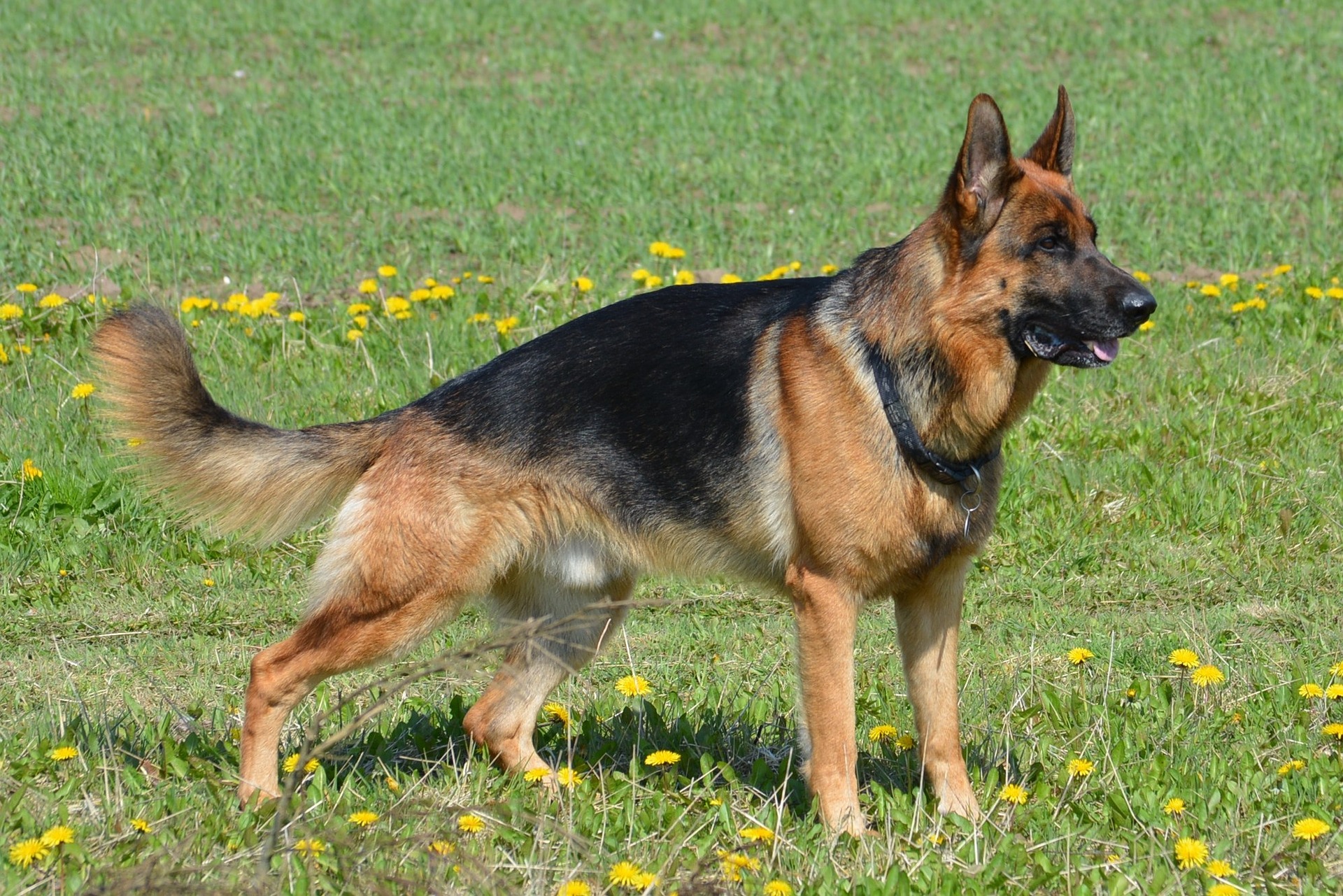
German Shepherds were developed to herd sheep, and over the following century they became one of the best-known working dogs in the world, serving as police dogs, military dogs, and guide dogs for the blind. That history explains almost everything about training one at home.
A German Shepherd learns quickly, watches you closely, and wants something to do. Your job is less about convincing this dog to learn and more about giving all that intelligence and energy a useful direction, so that the habits they form early are the ones you actually want.
This guide walks you through what motivates the breed, which skills to teach first, how to plan training from puppyhood to adulthood, and how to keep a busy, clever dog satisfied with games and enrichment. Every method here is reward-based: treats, toys, play, and praise.
The Short Version
German Shepherd training works best with short, reward-based sessions of 3 to 5 minutes, several times a day, starting the week your puppy comes home. Begin with the Level 1 Foundations on our skill ladder: Teach Their Name, Sit, Down, and Wait. Then move to Level 2 Everyday Manners: Come When Called, Leave It, Go to Place, and Loose-Leash Walking. Because the German Shepherd is a member of the AKC Herding Group and was bred to work closely with a handler, plan for daily mental work as well as physical exercise, and treat calm, gentle socialization with people and places as just as important as obedience.
At a Glance
- AKC Group
- Herding
- Bred For
- Herding sheep in Germany, later police, military, and guide dog work
- Energy Level
- High; an energetic dog that needs a job and daily physical and mental exercise
- Best Rewards
- Small food treats, tug and fetch games, and enthusiastic praise
- First Skill to Teach
- Teach Their Name, followed by Sit
What Motivates a German Shepherd
The breed was standardized in Germany by Captain Max von Stephanitz, who founded the first German Shepherd Dog club in 1899. The foundation dog, Horand, was a working sheepherder, and von Stephanitz admired herding dogs for their intelligence and fast responsiveness. His guiding principle for the breed was utility and intelligence. Over time he promoted German Shepherds for service work, and the breed went on to work as messengers, sentries, search and rescue dogs, and guide dogs.
That background shaped a dog that likes to work alongside a person. The AKC describes German Shepherds as courageous, confident, and smart, eager to please, and in need of a job. A well-bred German Shepherd thrives on praise and wants to please their owner, which makes them very trainable. The flip side is equally important: the AKC notes that a bored German Shepherd is a destructive one. If you do not give this dog something to think about, they will find something on their own, and it may be your garden or the sofa cushions.
German Shepherds are also natural watchdogs. The AKC breed standard describes a certain aloofness that does not lend itself to immediate and indiscriminate friendships, and the breed is known to be wary of strangers and devoted to their own family. In training terms, this means your dog will often care a great deal about what you think and somewhat less about what a stranger in the park offers them. You become the most interesting thing in their world, which is a wonderful starting point for building attention and cooperation.
In practice, three things motivate most German Shepherds: food, play, and the chance to work with you. Many love tug and fetch, and a short game can be just as powerful a reward as a treat. Mixing rewards keeps sessions lively and lets you use toys when you want energy and food when you want calm precision.
Training Strengths and Challenges
The same traits that make German Shepherds such capable working dogs can make them a handful for a first-time owner who is not ready for them. Here is how they tend to balance out.
Strengths
- Highly intelligent and quick to pick up new cues
- Eager to please and responsive to praise
- Strong focus on their handler and family
- Usually motivated by both food and toys, which gives you more reward options
- Enjoy structured work and dog sports such as tracking, scent work, and agility
Watch For
- Boredom and destructive habits when they lack mental work
- Natural wariness of strangers that needs careful early socialization
- Chasing moving things, from cats to cars
- Mouthy, energetic puppy behavior in a large, strong body
- A long adolescence, since many do not mature fully until two or three years old
None of the challenges are reasons to avoid the breed. They are simply the areas where a little planning goes a long way. A German Shepherd who gets regular training, enough exercise, and plenty of positive experiences with the world is usually a confident, steady companion.
A Training Plan by Age
This plan follows the order of our skill ladder and lines up with the stages a German Shepherd puppy moves through. Treat the ages as a rough guide rather than a deadline. Some dogs move faster and some need more time at a stage, and both are normal.
| Age | Focus Skills | What to Work On |
|---|---|---|
| 8 to 16 weeks | Teach Their Name, Sit, Down, Wait | Gentle socialization with people, sounds, and surfaces; crate and house training; short sessions of 3 to 5 minutes |
| 4 to 6 months | Come When Called, Leave It, Loose-Leash Walking | Puppy class; asking for a sit before food, toys, and doors; practicing recall indoors and in a fenced yard |
| 6 to 12 months | Go to Place, Loose-Leash Walking around distractions | Steady practice through adolescence; adding distance and distractions slowly; introducing scent games |
| Adult | Level 3 Tricks: Shake, Spin, Roll Over, Play Dead | Keeping skills sharp in new places; dog sports such as tracking, scent work, or agility; ongoing mental work |
The AKC points out that the socialization window closes at around 12 to 16 weeks of age, so the first stage matters most. During those weeks, let your puppy meet many kinds of people in calm, non-threatening situations, and pair new sights and sounds with treats. Keep each experience short and pleasant. The goal is a puppy who learns that new things are interesting, not overwhelming.
Between 4 and 6 months, your puppy is ready for more structure. A good reward-based puppy class gives you expert coaching and gives your dog practice paying attention around other dogs and people. Building impulse control at home is just as valuable. Asking for a sit before dinner, before a toy is thrown, or before the door opens teaches your German Shepherd that calm behavior is what makes good things happen.
From 6 to 12 months, many German Shepherds go through an adolescent phase where skills they knew well suddenly seem to disappear. This is normal. Go back to easier versions of each skill, keep sessions short, and keep rewarding. Because the breed often takes until two or three years old to mature fully, steady and patient practice through this stretch pays off.
Best First Skills for a German Shepherd
Start at the bottom of the skill ladder and work up. Each skill builds on the one before it, and a German Shepherd will move through the early levels quickly if you keep the steps small and the rewards frequent.
Teach Their Name and Sit
Name recognition comes first because it is how you get your dog’s attention for everything else. Say the name once in a cheerful voice and reward the moment your puppy looks at you. Once that is reliable, teach Sit with a food lure: hold a treat at your puppy’s nose, move it slowly up and back, and mark with a click or “yes” the moment their rear touches the floor. Sit quickly becomes your dog’s default way of asking for things, which is especially handy with a large, enthusiastic breed.
Down and Wait
Down is a calming position and a foundation for later tricks such as Roll Over and Play Dead. Wait teaches your dog to pause briefly before going through a door, getting out of the car, or diving into a food bowl. For an energetic German Shepherd, these two skills are your first tools for building self-control. Start with just a second or two of waiting and build up slowly.
Come When Called and Leave It
The AKC notes that a reliable recall takes a lot of time, practice, and patience, so start early and make coming to you the best game in the house. Practice indoors first, then in a fenced yard, and always reward generously. Leave It is equally important for a breed that likes to chase and investigate. Teach it with a treat in a closed hand, rewarding your dog for backing away, then progress to items on the floor.
Loose-Leash Walking and Go to Place
A German Shepherd who pulls on leash is hard to walk, so teach Loose-Leash Walking early, while your puppy is still small. Reward your dog often for being at your side, and stop moving when the leash gets tight. Go to Place teaches your dog to settle on a mat or bed, which is useful when guests arrive or during family meals. It gives a busy dog a clear job to do when the household is busy.
Exercise, Games, and Enrichment
The AKC recommends extensive physical and mental exercise every day for German Shepherds. Physical exercise matters, but for this breed mental work is often the missing piece. A dog who has walked for an hour may still be restless, while a dog who has spent 10 minutes solving a training puzzle is often ready to rest.
Training itself is one of the best forms of enrichment. Several short sessions spread through the day, practicing known skills in new places, use your dog’s brain and strengthen your bond. Scent games are another excellent outlet. Hide a few treats around a room and encourage your dog to find them, then make the hiding spots harder over time. The AKC lists tracking and scent work among the activities that suit the breed as it matures.
Tug and fetch can be built into training too. Ask for a Sit or Down before each throw, or use a short game of tug as the reward for a great recall. Teaching your dog to drop the toy on cue keeps games safe and controlled. Puzzle feeders and food-stuffed chew toys are useful for quiet times, giving your dog something to do while you work or cook.
Dog sports give an adult German Shepherd a real job. Tracking, scent work, agility, obedience, rally, and herding are all options. You do not need to compete. A weekly class in a sport your dog enjoys can make a big difference in how settled they are at home.
Common Mistakes
Most training trouble with German Shepherds comes from a few predictable gaps.
- Waiting too long to socialize. The early weeks are when puppies are most open to new experiences. Start gentle, positive outings right away rather than waiting until your puppy is older.
- Relying on exercise alone. A tired body does not always mean a satisfied mind. Add training sessions, scent games, and puzzle toys to your daily routine.
- Making sessions too long. Smart dogs get bored with endless repetition. Keep sessions short and end while your dog still wants more.
- Letting rough play slide. Puppy mouthing is normal, but a growing German Shepherd is strong. Redirect teeth onto toys and reward calm play from day one.
- Skipping steps during adolescence. When skills seem to fall apart between 6 and 12 months, go back to easier versions instead of pushing ahead.
When to Get Professional Help
A good reward-based trainer is helpful for any German Shepherd owner, especially in the first year. If your dog barks or lunges at strangers or other dogs, seems fearful, guards food or toys, or chases with an intensity you cannot interrupt, keep them at a comfortable distance from the trigger and avoid situations that set them off. Then contact a certified professional dog trainer or a certified behavior consultant, and talk to your veterinarian if behavior changes suddenly, since a professional can assess your individual dog and build a plan that fits.
Frequently Asked Questions
These are the questions new German Shepherd owners ask most often.
Are German Shepherds Easy to Train?
German Shepherds are highly intelligent and eager to please, so they usually learn new skills quickly. What makes them challenging is their energy and need for a job. They are easy to teach and demanding to keep busy, so plan for daily training and enrichment as well as exercise.
When Should I Start Training My German Shepherd Puppy?
Start the week your puppy comes home, which is often around eight weeks old. Begin with name recognition, Sit, and gentle socialization in short, positive sessions. The early weeks are the most important time for helping your puppy feel comfortable with new people and places.
How Long Should German Shepherd Training Sessions Be?
For puppies, aim for 3 to 5 minutes per session, a few times a day. Adult dogs can handle sessions of 10 to 15 minutes, but several short sessions usually work better than one long one. Always stop while your dog is still enjoying it.
Do German Shepherds Need Protection Training?
Most family dogs do not. German Shepherds are naturally watchful, and most households are best served by a dog who is calm, friendly, and well-mannered. Focus on socialization and the Everyday Manners skills first. If you are interested in a dog sport later, choose one led by a qualified, reward-based instructor.