If every walk feels like your dog is towing you toward the next interesting smell, you are not alone. Pulling on the leash is one of the most common complaints dog owners have, and it makes walks tiring, frustrating, and sometimes unsafe for both of you. The good news is that the right harness can take a lot of the strain out of walks right away, while you teach your dog that a loose leash is the way to get where they want to go.
This guide covers the best no pull dog harness options currently sold in the US, how a front-clip harness actually works, how to measure and fit one properly, and how to pair it with simple reward-based training so the pulling fades for good instead of just being held in check.
We may earn a commission when you buy through links on this page, at no extra cost to you.
The Short Version
The best no pull dog harness for most dogs is a padded, Y-front harness with both a front chest clip and a back clip, such as the Ruffwear Front Range or the 2 Hounds Design Freedom. The front clip gently turns your dog toward you when they pull, which removes the forward momentum that makes pulling pay off. Fit it so two fingers slide flat under every strap, keep the straps off the shoulder joints, and use it alongside loose-leash training with treats. A harness manages pulling; training is what makes it stop.
Our Picks at a Glance
Every harness below has a front leash attachment, and most also have a back clip so you can switch between the two as your dog’s leash manners improve. Picks are based on design, materials, adjustability, sizing range, and consistent patterns in owner reviews.
| Pick | Best For | Key Feature |
|---|---|---|
| Ruffwear Front Range Dog Harness | Best overall | Padded Y-front design with front and back clips |
| 2 Hounds Design Freedom No-Pull Dog Harness | Strong pullers | Dual clips plus a back martingale loop and velvet-lined chest strap |
| Blue-9 Balance Harness | Hard-to-fit dogs | Six adjustment points and a shoulder-friendly Y-front |
| Rabbitgoo No-Pull Dog Harness | Budget pick | Padded vest with two metal leash clips and a top handle |
| Kurgo Tru-Fit Smart Harness | Car travel | Front D-ring plus an included seat belt tether |
| PetSafe Easy Walk Harness | Simple, lightweight option | Chest martingale loop with color-coded straps |
What Is a No-Pull Harness?
A no-pull harness is a harness with a leash attachment on the front of the chest, at the breastbone, instead of only on the back. When a dog pulls forward against a front clip, the leash tension redirects their chest sideways and back toward you, so they turn instead of driving ahead. That small turn interrupts the pulling, takes away the leverage a dog gets from leaning into a back-clip harness, and gives you a moment to reward them for coming back into position.
It helps to understand why this works. Dogs have a natural opposition reflex: when something pushes or pulls on them, they tend to push back. A back-clip harness turns that reflex against you, because your dog can lean their whole body weight into the chest strap, much like a sled dog. A front clip changes the direction of the force, so leaning in simply swings them around. Nothing is choking, pinching, or tightening around the neck, which is why front-clip harnesses are a popular choice with reward-based trainers.
Comparing Front-Clip, Back-Clip, and Dual-Clip Harnesses
The no pull harness category includes a few different designs, and the leash attachment point changes how the harness behaves on a walk. Here is how the three main types compare.
| Harness Type | Where the Leash Attaches | Effect on Pulling | Best For | Trade-Offs |
|---|---|---|---|---|
| Front-clip | Center of the chest, on the breastbone | Turns the dog sideways when they pull, reducing forward momentum | Dogs who pull, owners starting loose-leash training | Leash can tangle around front legs if it is too long or the dog lags behind |
| Back-clip | Top of the back, between the shoulder blades | Little to no effect; can make pulling easier because the dog leans into the chest | Dogs who already walk nicely, small dogs, hiking and running | Gives you the least steering control with a strong puller |
| Dual-clip | Both front and back rings | Front clip for management, back clip once pulling improves, or both with a double-ended leash for extra steering | Most owners, especially with medium and large dogs | Slightly more hardware and a few more straps to adjust |
For most households, a dual-clip harness is the most flexible choice. You can use the front clip while your dog is still learning, switch to the back clip for relaxed sniff walks or hikes, and clip a double-ended leash to both points when you need the most control, such as passing other dogs on a narrow sidewalk.
The Best No-Pull Dog Harnesses
Each harness here is a real, currently sold product from an established brand. They differ in padding, adjustability, and style, so the best choice depends on your dog’s body shape and how you walk together.
Best Overall
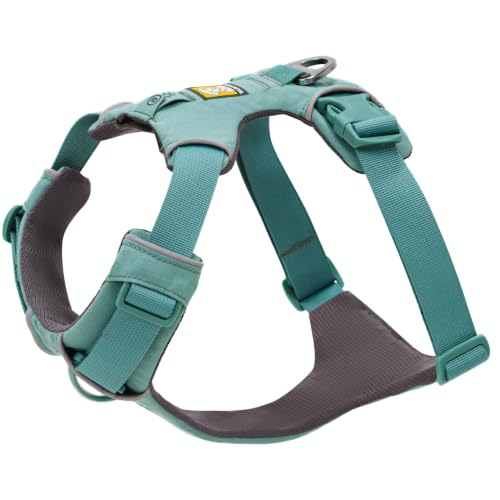
Ruffwear Front Range Dog Harness
The Front Range is a well-made everyday harness that does the no-pull job without feeling like a training tool. It has a reinforced webbing loop on the chest for front-clip walking and an aluminum V-ring on the back, plus foam padding on the chest and belly panels. The Y-shaped front leaves the shoulders free to move, and owners consistently mention that it stays put without rubbing on long walks. It suits most medium and large dogs, and it is a strong choice if you want one harness for training walks, errands, and weekend trails.
What We Like
- Front and back leash attachment points.
- Y-front design that keeps straps off the shoulder joints.
- Padded chest and belly panels with reflective trim for low light.
- Four adjustment points and a small ID tag pocket.
Keep in Mind
- The front attachment is a fabric loop rather than a metal ring, so some owners prefer a sturdier clip for very strong dogs.
- Deep-chested breeds may need to size carefully to avoid gapping at the chest.
Best for Strong Pullers
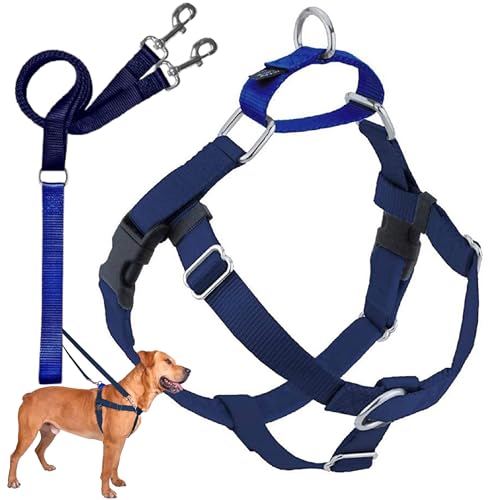
2 Hounds Design Freedom No-Pull Dog Harness
The Freedom harness is a longtime favorite of trainers and rescue groups because it gives you real steering power with a very simple design. It has a front ring on the chest and a back ring attached to a small martingale loop that snugs gently when the leash is pulled, which helps discourage leaning without restricting breathing. The chest strap is lined with soft velvet to cut down on rubbing behind the front legs. Many owners pair it with a double-ended leash on both rings, which is especially helpful for large, strong dogs.
What We Like
- Front and back rings that work well together with a double-ended leash.
- Velvet-lined chest strap to reduce chafing.
- Four adjustment points for a close fit.
- Made in the USA and sold in a wide range of sizes and colors.
Keep in Mind
- Thin nylon webbing is less padded than vest-style harnesses.
- Takes a few tries to adjust all the straps correctly the first time.
Best Adjustable Fit
Blue-9 Balance Harness
If your dog falls between standard sizes or has an unusual build, the Balance Harness is worth a look. It has six points of adjustment, so you can fine-tune the neck, chest, and girth straps independently, and the Y-front shape sits on the breastbone without crossing the shoulders. It has both a front and a back ring, and the buckle-neck version lets you put it on without lifting your dog’s paws. Owners with narrow sighthounds, barrel-chested breeds, and growing puppies often mention how much better it fits than one-size-fits-most designs.
What We Like
- Six adjustment points for a truly custom fit.
- Shoulder-friendly Y-front design.
- Buckle-neck option for dogs who dislike having a harness pulled over their head.
- Made in the USA.
Keep in Mind
- All that adjustability takes some patience during the first fitting.
- Minimal padding, so it feels more like a strap harness than a vest.

Best Budget Pick
Rabbitgoo No-Pull Dog Harness
The Rabbitgoo is one of the most popular harnesses on Amazon, and its appeal is easy to see. It is a soft, padded vest with a metal leash clip on the chest and another on the back, a sturdy handle on top for quick control, and reflective strips for evening walks. It is a practical, affordable choice for owners who want a comfortable vest-style harness with no-pull capability, and it comes in sizes for small, medium, and large dogs.
What We Like
- Two metal leash clips, front and back.
- Top handle that helps when you need to guide your dog quickly.
- Soft padding and reflective details.
- Wide size range and plenty of colors.
Keep in Mind
- The vest covers more of the chest and can feel warm in hot weather.
- Check the fit around the shoulders carefully, since vest designs can sit lower across the front than a Y-front.

Best for Car Travel
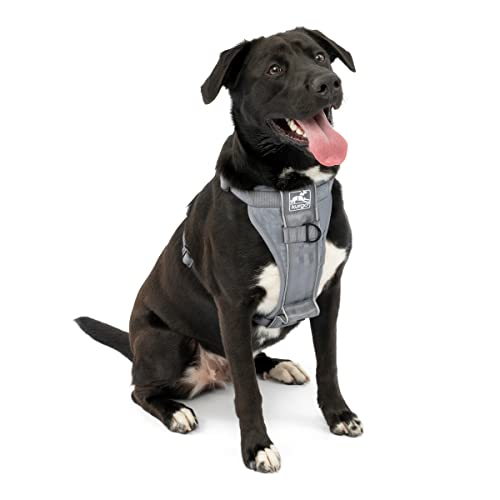
Kurgo Tru-Fit Smart Harness
The Tru-Fit is a good fit for families who drive to parks and trailheads. It has a front D-ring for no-pull walking, a back attachment point, and a padded chest plate, and it comes with a seat belt tether so the same harness works for walks and car rides. Five adjustment points help you get a snug fit, and the quick-release buckles make it easy to take on and off once it is set up. It suits active medium and large dogs who spend a lot of time on the go.
What We Like
- Front D-ring for no-pull use and a back attachment for casual walks.
- Includes a seat belt tether for car trips.
- Five adjustment points and a padded chest plate.
- Quick-release buckles for easy on and off.
Keep in Mind
- Heavier and bulkier than simple strap harnesses, which small dogs may not enjoy.
- The chest plate is wide, so measure carefully on narrow-chested dogs.
Simplest Lightweight Option
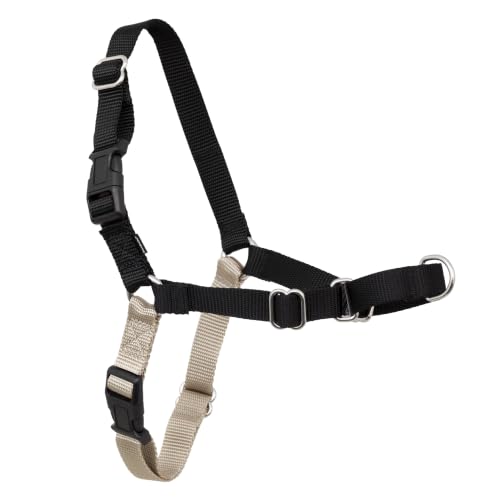
PetSafe Easy Walk Harness
The Easy Walk is probably the best-known front-clip harness in the US, and owners like how quickly it takes the edge off pulling. The leash attaches to a martingale loop at the center of the chest, which tightens slightly to keep the harness from twisting when your dog pulls. The shoulder and belly straps are different colors, so it is easy to see which way it goes on. It is a light, minimal option for short-term management while you build loose-leash skills.
What We Like
- Very lightweight and quick to put on.
- Color-coded straps that make fitting easier.
- Martingale chest loop that keeps the harness centered.
- Widely available in many sizes.
Keep in Mind
- The chest strap runs straight across the front of the shoulders rather than in a Y shape, which some rehab professionals prefer to avoid for long-term daily use.
- There is no back clip, so it is mostly a training and management tool.

How to Choose a No-Pull Harness
All of the harnesses above can reduce pulling, but the right one for your dog depends on their body shape, their walking style, and what you need the harness to do. These are the factors that matter most.
Look for a Y-Front Design
Some veterinarians, canine physical rehabilitation professionals, and sports medicine practitioners prefer harnesses with a Y-shaped front, where the straps meet at the breastbone and leave the point of the shoulder free to move. Their gentle concern is that a strap running straight across the front of the chest can sit over the shoulder joints and may limit a dog’s natural stride over time. Research on this is still limited, and plenty of dogs walk happily in horizontal-strap harnesses, but if you have the choice, a Y-front is an easy way to play it safe. Avoid any harness that tightens across the shoulders or under the front legs when your dog pulls, and ask your vet if your dog has joint problems or is still growing.
Pick Dual Clips if You Can
A harness with both a front and back attachment grows with your training. Use the front clip while your dog is learning, then move to the back clip once loose-leash walking is reliable. Having both also lets you use a double-ended leash for extra steering in busy places.
Count the Adjustment Points
Most good harnesses have four to six adjustment points. More adjustment means a better fit for dogs with deep chests, narrow waists, thick necks, or other proportions that fall between sizes. A harness that fits well stays centered, which is exactly what makes the front clip work.
Match Padding to Your Dog
Padded vest harnesses feel comfortable and spread pressure across a wider area, but they can be warm in summer and bulky on small dogs. Strap harnesses are lighter and cooler but need careful fitting to avoid rubbing. Short-coated dogs tend to do better with padding or soft linings behind the front legs.
Think About How and Where You Walk
If you walk at night, look for reflective trim. If you drive to your walks, a harness with a seat belt tether saves you from buying separate gear. If you hike, a top handle can help you guide your dog over rocks or through crowds.
How to Measure and Fit a No-Pull Harness
Fit is everything with a front-clip harness. If it is too loose, the chest clip slides to one side and the harness loses its turning effect. If it is too tight, it rubs and restricts movement. Grab a soft measuring tape and follow these steps.
-
Step 1: Measure the Girth
Wrap the tape around the widest part of your dog’s rib cage, just behind the front legs. This chest girth measurement is the number most brands use for sizing. Keep the tape snug but not tight, and take it while your dog is standing.
-
Step 2: Measure the Neck
Measure around the base of the neck, where it meets the shoulders, not up where a collar sits. Some harnesses size by neck as well as girth, and this number helps when your dog falls between two sizes.
-
Step 3: Compare to the Size Chart
Check the brand’s own size chart, since sizes vary a lot between makers. If your dog is between sizes, the girth measurement usually matters most, and choosing the size with the most adjustment room on either side of your number is a safe bet.
-
Step 4: Use the Two-Finger Rule
Once the harness is on, you should be able to slide two fingers flat under every strap. If you can fit more than two, tighten it. If you cannot get two fingers under easily, loosen it a little.
-
Step 5: Check the Clip and Straps
The front clip should sit in the center of the chest on the breastbone. The belly strap should sit about a hand’s width behind the front legs so it does not rub the armpits, and the straps should not cross the point of the shoulder. Walk your dog a few steps and check again, since straps often settle after a minute of movement.
Recheck the fit every few weeks, and more often for puppies, since growth and changes in weight or coat can quickly loosen or tighten a harness.
How to Use a No-Pull Harness in Training
A no-pull harness is a management tool. It makes pulling harder and less rewarding, but it does not teach your dog what you want them to do instead. Dogs pull because pulling works: it gets them to the tree, the other dog, or the park faster. To change that, you need to make walking near you more rewarding than pulling ahead. The good news is that a front-clip harness makes training much easier because you are not fighting your dog’s full body weight while you teach.
-
Step 1: Start Somewhere Boring
Practice in your living room, backyard, or a quiet hallway first. Fewer distractions mean more chances for your dog to get it right and earn a reward.
-
Step 2: Reward the Sweet Spot
Choose the side you want your dog to walk on. Every time your dog is next to your leg with a loose leash, mark it with a word like “yes” and deliver a small, tasty treat right at your pant seam. Reward often at first, every step or two if needed.
-
Step 3: Stop When the Leash Gets Tight
If your dog pulls, stop walking and wait. The front clip will gently turn them toward you. The moment they look back or the leash loosens, mark and reward, then start walking again. Your dog learns that a tight leash means the walk pauses and a loose leash means it continues.
-
Step 4: Change Direction
If stopping is not enough, turn around cheerfully and walk the other way. Reward your dog when they catch up to your side. This keeps them paying attention to where you are going.
-
Step 5: Add Distractions Slowly
Once your dog walks nicely at home, move to the driveway, then the quiet end of your street, then busier routes. Raise the value of your treats as distractions grow, and keep sessions short and upbeat.
Use sniffing as a reward too. Saying “go sniff” and letting your dog explore a patch of grass after a stretch of loose-leash walking is a powerful reinforcer that costs you nothing. Over several weeks, most dogs pull less and less, and many can eventually move to the back clip for everyday walks.
Common Mistakes to Avoid
A no-pull harness works best when it is fitted well and used as part of a training plan. These are the mistakes owners make most often.
- Treating the harness as a cure. Without reward-based training, many dogs simply learn to pull at an angle, so pair the harness with loose-leash practice from day one.
- Fitting it too loosely. A loose harness lets the front clip slide to the side, which reduces its effect and can cause rubbing, so stick to the two-finger rule.
- Using a very long leash on the front clip. Extra slack can wrap around your dog’s front legs, so a 4 to 6 foot leash is usually the most practical length.
- Yanking or jerking the leash. Sharp corrections on a front clip can twist your dog’s body awkwardly, so stop, wait, and reward instead.
- Choosing a design that tightens across the shoulders. Harnesses that clamp down across the front of the shoulders when a dog pulls can limit movement, so a Y-front design is the gentler choice.
- Leaving the harness on all day. Harnesses can rub or get caught when left on unsupervised, so take it off after walks and check for any redness under the straps.
- Skipping a slow introduction. Some dogs are nervous about new gear, so let your dog sniff the harness, reward them for putting their head through, and keep the first few sessions short.
Watch It in Action
This video from Kikopup shows reward-based loose-leash walking techniques for dogs who are strong pullers, which pairs well with any front-clip harness on this list.
Frequently Asked Questions
Here are quick answers to the questions owners ask most about no-pull harnesses.
Do No-Pull Harnesses Actually Work?
Yes, for most dogs a front-clip harness noticeably reduces pulling from the first walk because it turns the dog toward you instead of letting them lean forward. It is not a permanent fix on its own, though. The pulling fades for good when you also reward your dog for walking on a loose leash.
Is a No-Pull Harness Better Than a Collar for a Dog That Pulls?
For dogs that pull, a well-fitted harness is usually the more comfortable choice because it spreads pressure across the chest rather than the neck. A flat collar is still useful for holding ID tags. If your dog has breathing or neck concerns, ask your vet which option suits them best.
Can a Puppy Wear a No-Pull Harness?
Yes, puppies can wear a front-clip harness as long as it fits well and is checked often as they grow. Highly adjustable designs are helpful for growing puppies. Keep early walks short and focus on rewarding a loose leash so good habits start early.
How Long Should My Dog Wear a No-Pull Harness?
Use it for walks and training sessions, then take it off at home. Many dogs can switch to the back clip, or to a standard harness, once they walk reliably on a loose leash. That usually takes several weeks of consistent practice.
Why Does My Dog Still Pull in a No-Pull Harness?
The most common reasons are a loose fit that lets the clip slide sideways, a leash that is too long, or a lack of training to go with the harness. Tighten the straps using the two-finger rule, shorten the leash, and start rewarding your dog for staying by your side.
Video: Kikopup, embedded from YouTube.