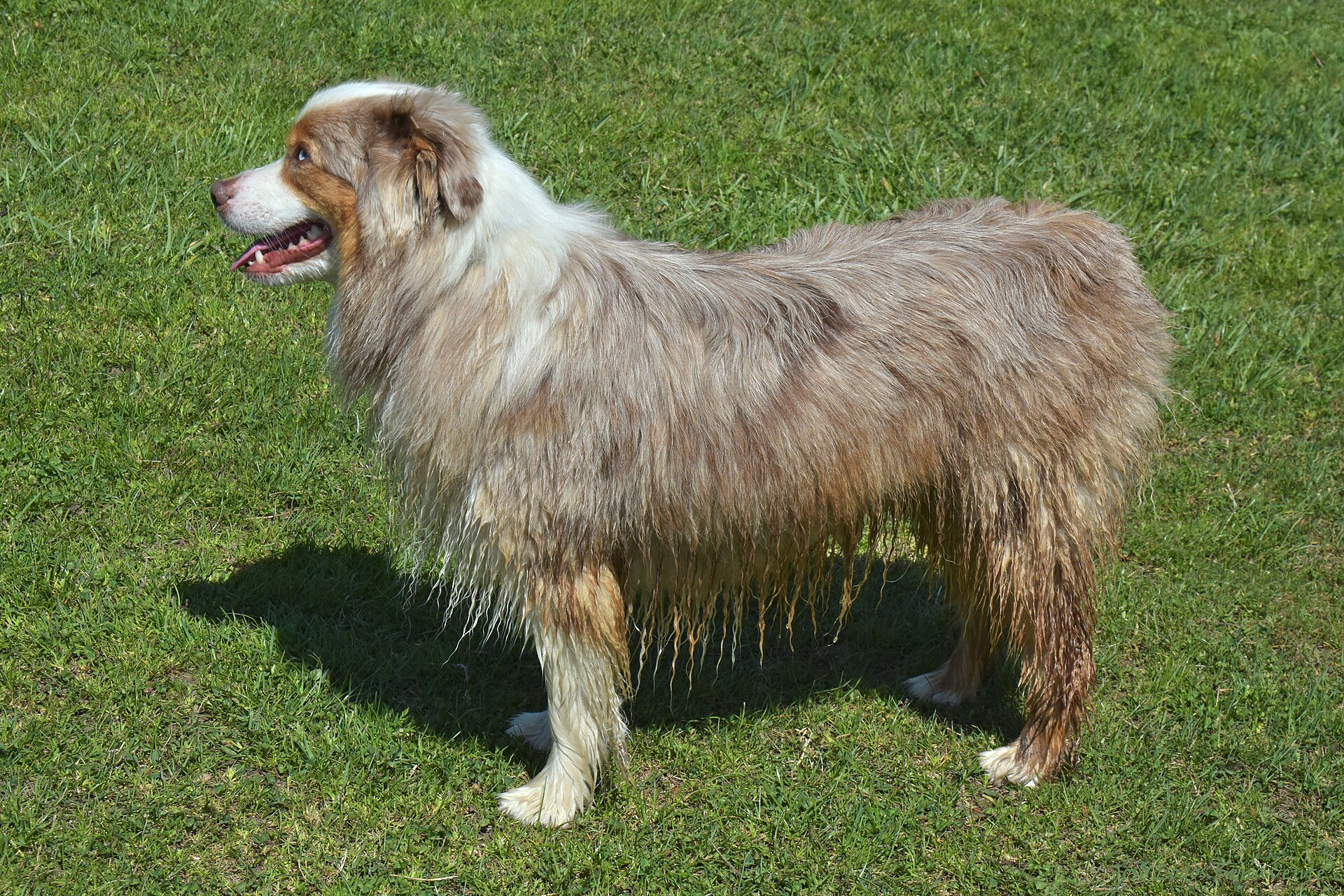
Despite the name, the Australian Shepherd is an American ranch dog. The breed as we know it today was developed in the United States, where its versatility and trainability made it useful on farms and ranches, and where it became a familiar sight at rodeos. An Aussie is smart, quick, athletic, and wired to work. That combination makes training a pleasure when you give the dog enough to do, and a real challenge when you do not.
This guide explains what drives an Australian Shepherd, how to plan training from the first weeks to adulthood, which skills to start with, and how to channel herding energy into games your dog will love. All of the methods here are reward-based, using treats, toys, play, and praise.
The Short Version
Australian Shepherd training works best when you combine short, reward-based sessions of 3 to 5 minutes with plenty of daily exercise and a regular “job” for your dog. Start with the Level 1 Foundations on our skill ladder: Teach Their Name, Sit, Down, and Wait. Then build the Level 2 Everyday Manners an energetic herding dog needs most: Come When Called, Leave It, Go to Place, and Loose-Leash Walking. The Australian Shepherd belongs to the AKC Herding Group, learns very quickly, and is often reserved with strangers, so pair obedience practice with calm, positive socialization from the start.
At a Glance
- AKC Group
- Herding
- Bred For
- Herding and guarding livestock on American farms and ranches
- Energy Level
- Very high; needs a great deal of daily exercise and a job to do
- Best Rewards
- Small food treats, chase and fetch games, tug, and praise
- First Skill to Teach
- Teach Their Name, followed by Sit and Wait
What Motivates an Australian Shepherd
The AKC describes the Australian Shepherd as a European breed perfected in California by way of Australia, and calls it a lean, tough ranch dog. The United States Australian Shepherd Association, the breed’s parent club, explains that the Aussie developed in the United States and grew in popularity after World War II with the boom in western riding, rodeos, horse shows, movies, and television. On the ranch, these dogs brought in livestock and found strays, and the breed’s versatility led to work as guide dogs, service dogs, search and rescue dogs, and more.
That working background is the key to understanding what motivates your dog. The Australian Shepherd Club of America describes the breed as an intelligent, all-purpose stock dog of great character and endurance, and points out that Aussies were bred to be smart enough to outthink livestock. The same club notes, with some humor, that Aussies are quite capable of outthinking their owners too. They learn very quickly, which means they also pick up habits you never meant to teach.
Most Aussies are motivated by a mix of food, movement, and the chance to work with you. The AKC calls them smart, work-oriented, and exuberant, and extremely eager to please. Both breed clubs stress that Aussies need a job. That job does not have to be herding sheep. It can be daily training, a dog sport, scent games, or helping with household routines. What matters is that your dog has regular, structured ways to use their brain and body.
Aussies also tend to be cautious with new people. The Australian Shepherd Club of America says the breed tends to be somewhat reserved around strangers, and advises owners to encourage meeting people without forcing it. In training, this usually means your Aussie will be very focused on you and less interested in strangers, which helps with attention work but makes thoughtful socialization especially important.
Training Strengths and Challenges
An Australian Shepherd can be one of the most rewarding dogs to train, as long as you plan around a few breed tendencies.
Strengths
- Learns new skills very quickly, often by watching
- Eager to please and highly responsive to their handler
- Loves to work and thrives on structured activities
- Usually enjoys both food and toy rewards
- Excels at dog sports such as agility, obedience, rally, herding, and tracking
Watch For
- Very high energy that can turn into digging and chewing without an outlet
- A strong herding instinct that may be aimed at children, other dogs, or traffic
- Reserve with strangers that needs gentle, early socialization
- Protectiveness of family and property in some dogs
- A tendency to invent their own fun when bored
The breed clubs are direct about the biggest challenge. The United States Australian Shepherd Association notes that underestimating an Aussie’s energy is one of the most frequent reasons these dogs end up in rescue. Choosing the breed means committing to daily exercise and training for the life of the dog.
A Training Plan by Age
This plan follows our skill ladder from Foundations to Tricks. The ages are a guide, not a deadline. Move on when your dog is succeeding at least 4 out of 5 times at the current stage.
| Age | Focus Skills | What to Work On |
|---|---|---|
| 8 to 16 weeks | Teach Their Name, Sit, Down, Wait | Calm, positive meetings with new people; new sounds and surfaces; crate and house training; short play-based sessions |
| 4 to 6 months | Come When Called, Leave It, Loose-Leash Walking | Puppy class; recall games indoors and in a fenced yard; redirecting chasing onto toys |
| 6 to 12 months | Go to Place, Loose-Leash Walking around distractions | Practicing settling down after activity; adding distractions slowly; introducing a dog sport or scent games |
| Adult | Level 3 Tricks: Shake, Spin, Roll Over, Play Dead | Regular sport or class; new tricks to keep the brain busy; keeping manners solid in new places |
In the first stage, focus on helping your puppy feel comfortable in the world. Because Aussies are often reserved with strangers, let your puppy approach new people at their own pace, and have visitors toss a treat rather than reaching over the puppy’s head. Short, happy experiences build confidence. Pushing a shy puppy into greetings tends to backfire.
From 4 to 6 months, your Aussie is ready for more structure. Recall and Leave It are especially important for a dog who may want to chase anything that moves. A reward-based puppy class gives you coaching and gives your dog practice focusing around other dogs.
Between 6 and 12 months, teach your dog to switch off. Go to Place is valuable for this breed because many Aussies find relaxing harder than working. Reward your dog for lying calmly on a mat, starting with a few seconds and building up. A dog who can settle is much easier to live with.
Best First Skills for an Australian Shepherd
Work up the skill ladder in order. An Aussie will often learn each step in a session or two, so the challenge is usually building reliability rather than teaching the basic behavior.
Teach Their Name and Sit
Start with the name game. Say your puppy’s name once, then mark with a click or “yes” and reward the moment they look at you. Next, teach Sit with a food lure moved slowly up and back over your puppy’s head. For an active breed, Sit becomes a polite way to ask for things, from dinner to a thrown ball.
Down and Wait
Down helps an excited Aussie settle, and it is the starting point for tricks such as Roll Over and Play Dead later on. Wait teaches a brief pause at doors, at the car, and before meals. These skills are where impulse control begins, and impulse control is what turns a busy herding dog into a pleasant housemate.
Come When Called and Leave It
Because the Australian Shepherd Club of America notes that Aussies need fenced yards and leashes, practice recall in safe, enclosed spaces. Make coming to you worth it every time with a great treat or a game. Leave It gives you a way to interrupt your dog before they follow a moving target. Start with a treat in your closed hand and build up to objects on the floor.
Loose-Leash Walking and Go to Place
Aussies tend to move fast, so reward your dog often for staying near your side, and pause when the leash tightens. Go to Place gives your dog a clear job during busy times at home, such as when guests arrive or children are playing, and teaches them that calm is rewarding too.
Herding Behavior Around Children and Pets
The AKC notes that Aussies may try to herd running children, and the Australian Shepherd Club of America says the breed’s herding instinct can extend to other dogs and traffic. Treat this as instinct, not bad behavior, and manage it. Supervise play between your dog and children, give your Aussie a calm job such as Go to Place when kids are running around, and offer plenty of chase games with toys instead. If herding turns into nipping that you cannot easily redirect, work with a certified professional dog trainer or a certified behavior consultant.
Exercise, Games, and Enrichment
The United States Australian Shepherd Association describes Aussies as very active dogs that need a great deal of exercise on a daily basis, and warns that a dog without enough outlets can become bored, frustrated, and destructive. The Australian Shepherd Club of America adds that running, jumping, and rough-housing are part of being a normal Aussie. Plan for activity every day, not only on weekends.
Mental work matters just as much. Several short training sessions a day, practicing known skills in new places, are a simple way to give your dog a job. Trick training is perfect for this breed. Once the basics are solid, teach Shake, Spin, Roll Over, and Play Dead, which keeps your dog thinking and makes training fun for the whole family.
Structured play channels the herding drive. Fetch and flirt pole games give your dog something to chase, and asking for a Sit or Wait before each throw adds self-control to the fun. Scent games, such as hiding treats around the house for your dog to find, offer a calmer form of enrichment for the evening.
Dog sports are an excellent long-term outlet. The breed’s parent club runs events in conformation, herding, obedience, rally, agility, and tracking. A weekly class in a sport your dog enjoys gives them the purpose both breed clubs describe as essential.
Common Mistakes
These are the patterns that most often make training harder with an Australian Shepherd.
- Underestimating the energy. A short walk around the block is rarely enough. Combine physical exercise with daily training and games.
- Forcing greetings with strangers. A reserved Aussie needs time. Let your dog approach at their own pace and reward calm curiosity.
- Accidentally rewarding herding. Laughing or running when your dog chases children makes the game more fun. Redirect to a toy or a calm job instead.
- Never teaching an off switch. Busy dogs need to learn that settling pays. Practice Go to Place every day.
- Letting a smart dog get bored. Repeating the same easy drill over and over invites your Aussie to make up their own games. Keep sessions short and varied.
When to Get Professional Help
A reward-based trainer or class is a great investment for any Aussie owner. If your dog nips people, reacts strongly to strangers or other dogs, guards toys or food, or seems anxious, give them more space from the trigger for now and contact a certified professional dog trainer or a certified behavior consultant. Talk to your veterinarian too if behavior changes suddenly.
Frequently Asked Questions
Here are answers to the questions Aussie owners ask most.
Are Australian Shepherds Easy to Train?
Australian Shepherds are intelligent and eager to please, and both breed clubs describe them as quick learners. They are easy to teach but demanding to live with if their need for exercise and mental work is not met. Training goes best when it is part of a daily routine.
How Do I Stop My Australian Shepherd from Herding My Kids?
Supervise play, give your dog a calm job such as Go to Place when children are running, and offer toy-based chase games as an outlet. Avoid running away from your dog in play, since that can make herding more exciting. If nipping continues, get help from a certified trainer or behavior consultant.
How Much Exercise Does an Australian Shepherd Need for Training to Stick?
The breed clubs describe Aussies as very active dogs that need a great deal of daily exercise. A dog with enough physical activity and mental work is usually much more focused during training. Combine walks or play with short daily sessions and enrichment games.
Is an Australian Shepherd a Good Dog for a First-Time Owner?
It can be, if you are ready for the commitment. Aussies need daily exercise, regular training, and gentle socialization. First-time owners who enjoy an active lifestyle and plan to attend a reward-based class often do very well with the breed.