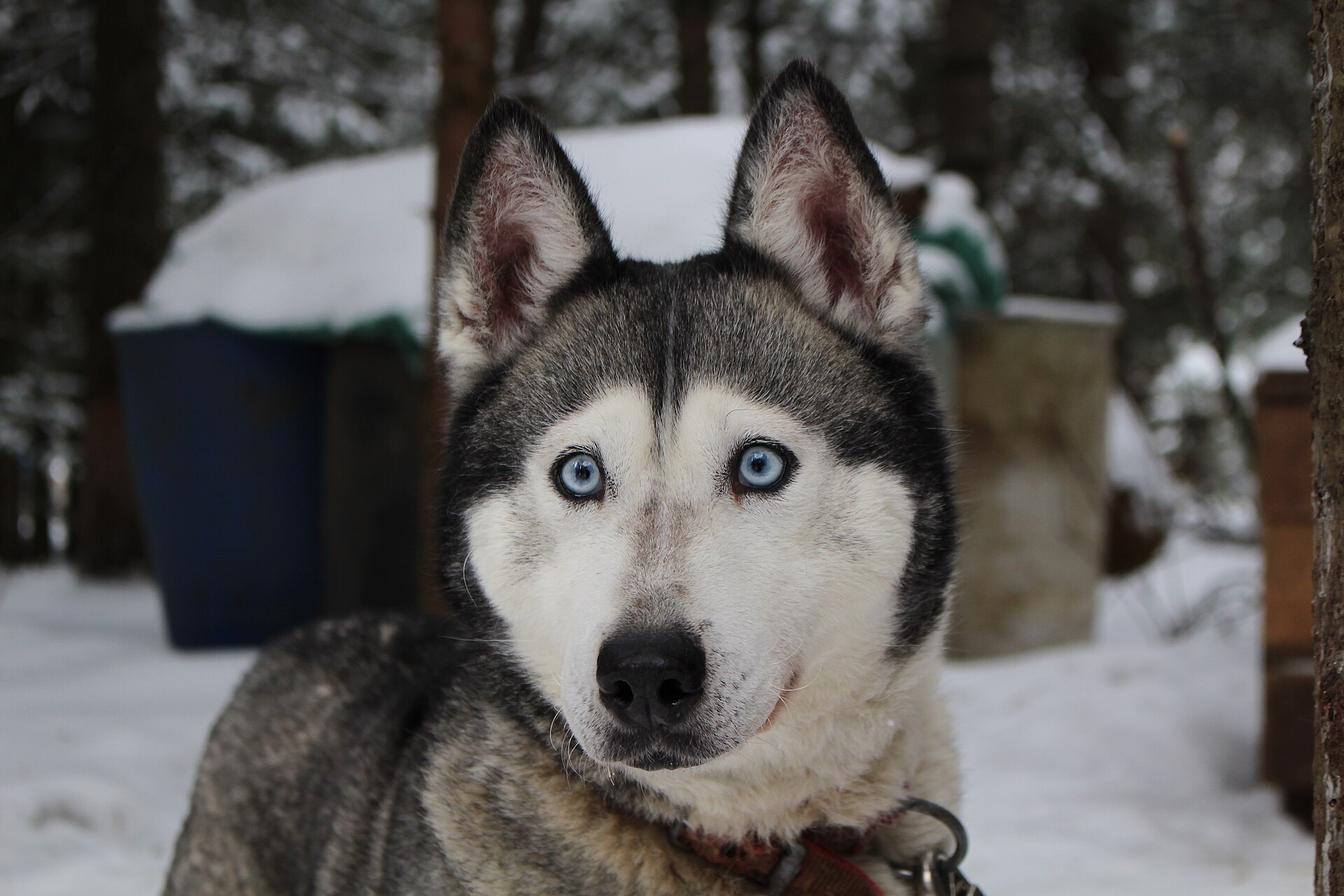
The Siberian Husky was built to run. Developed by the Chukchi people of northeastern Asia as an endurance sled dog, the breed worked in teams pulling light loads at moderate speeds over vast frozen distances. Today’s Husky still carries that drive to move, along with a friendly, sociable nature and an independent streak that keeps owners on their toes. Training a Husky is very doable, but it rewards owners who plan for the breed’s instincts rather than hoping they will fade.
This guide covers what motivates a Husky, a training plan by age, the skills to teach first, and how to manage recall, escaping, and all that talking. Every method here is reward-based, using treats, play, and praise.
The Short Version
Husky training works best with short, varied, reward-based sessions of 3 to 5 minutes, secure containment, and plenty of daily exercise. Start with the Level 1 Foundations on our skill ladder: Teach Their Name, Sit, Down, and Wait. Then build the Level 2 Everyday Manners, especially Come When Called, Leave It, and Loose-Leash Walking. The Siberian Husky is a member of the AKC Working Group with a strong urge to run and a strong prey drive, so its breed club advises that a Husky be kept confined or under control at all times, even when its training is going well.
At a Glance
- AKC Group
- Working
- Bred For
- Pulling sleds in teams over long distances
- Energy Level
- High; a naturally inquisitive breed with a deep-rooted instinct to run
- Best Rewards
- A rotating mix of tasty treats, chase games, and praise
- First Skill to Teach
- Teach Their Name, followed by Sit
What Motivates a Husky
The Siberian Husky Club of America explains that the breed was developed by the Chukchi people as an endurance sled dog, and that Huskies became famous in 1925 when relays of dog teams carried life-saving diphtheria serum to Nome, Alaska. The AKC describes the breed as developed to work in packs, pulling light loads at moderate speeds over vast frozen expanses, and calls the Husky friendly, fastidious, and dignified.
That working history shapes a dog that is athletic, social, and capable of making their own decisions. The breed club notes that a Husky’s independent spirit may at times challenge your ingenuity. The same club describes the breed as alert, eager to please, and adaptable, with intelligence that has been proven. In training terms, that means a Husky can learn anything a typical family dog needs, but they may want to know what is in it for them.
The AKC notes that Huskies won’t be entertained for long by games of fetch, but chase might work better. That fits a dog bred to run. Many Huskies respond well to a mix of rewards, so rotate between tasty treats, short chase games, and praise to keep sessions interesting. Varying the routine matters too. A Husky who knows exactly what comes next may lose interest, while short, fresh sessions keep them engaged.
Huskies are also very social. The AKC describes them as loyal and social by nature, with an innate friendliness, and notes that they do not enjoy being alone and thrive on companionship. The breed club adds that a Husky is not usually a one-person dog and will greet guests cordially rather than act as a guard dog. Being part of family life is a reward in itself for this breed.
Training Strengths and Challenges
Huskies are friendly, smart, and athletic, and those traits come with a few challenges every owner should plan for.
Strengths
- Intelligent and able to learn quickly
- Friendly and sociable with people, including guests
- Enthusiastic about running, pulling, and active games
- Eager to please when training is fun and varied
- A great fit for active households and harness sports
Watch For
- An independent streak that tests your creativity
- A strong urge to run, which makes off-leash recall risky
- A reputation as escape artists and diggers
- A strong prey drive toward small animals
- Howling, whining, and other vocal communication
The most important thing to know is that good training does not replace good management for this breed. The Siberian Husky Club of America says no Husky should ever be allowed unrestrained freedom, and that one quick run across a busy street could be the last. Training and secure containment work together.
A Training Plan by Age
This plan follows our skill ladder, with extra focus on the skills and habits that matter most for a Husky. Treat the ages as a guide and move on when your dog succeeds at least 4 out of 5 times.
| Age | Focus Skills | What to Work On |
|---|---|---|
| 8 to 16 weeks | Teach Their Name, Sit, Down, Wait | Crate training; gentle socialization; redirecting mouthing and chewing onto toys; short, playful sessions |
| 4 to 6 months | Come When Called, Leave It, Loose-Leash Walking | Puppy class; recall games in secure areas; Wait at every door and gate |
| 6 to 12 months | Go to Place, Loose-Leash Walking around distractions | Settling after exercise; walking past small animals at a distance; checking the yard for escape routes |
| Adult | Level 3 Tricks: Shake, Spin, Roll Over, Play Dead | Harness sports or other activity; keeping recall practice on a long line; new tricks for variety |
The AKC recommends crate training for Huskies for safety and for times when guests visit, and suggests addressing mouthing and chewing early. In the first stage, keep sessions short, use lots of toys to redirect sharp puppy teeth, and introduce your puppy to new people, sounds, and places in a calm, positive way. The AKC also recommends puppy classes that require proof of vaccination for early socialization with other dogs.
From 4 to 6 months, make Wait a household rule at every door and gate. A Husky who pauses before going through a door is much less likely to slip out. Recall practice belongs in fenced areas or on a long line, and should always end with a great reward.
From 6 to 12 months, focus on settling and on walking politely around distractions. Practice Loose-Leash Walking with small animals far away, and reward your dog for looking back at you. As skills improve, keep checking your yard. The AKC suggests watching how your own Husky tries to escape and building your routines around it.
Best First Skills for a Husky
Work up the skill ladder in order. Keep sessions short and varied, and stop while your Husky is still interested.
Teach Their Name and Sit
Say your Husky’s name once in a happy voice, then mark with a click or “yes” and reward the moment they look at you. This simple game is the first half of recall, so practice it often. Teach Sit with a food lure moved slowly up and back over your puppy’s head, and use Sit as a polite way to ask for meals, toys, and doors.
Down and Wait
Down helps an energetic dog settle and is the base for later tricks such as Roll Over and Play Dead. Wait is a safety skill for this breed. Practice it at every doorway, gate, and car door, starting with a one-second pause and building slowly. Reward heavily for waiting, and only release your dog with a clear cue.
Come When Called
Recall takes extra patience with a Husky. Use your best rewards, keep practice fun, and never call your dog for something unpleasant. Practice indoors, then in a fenced yard, and use a long line in open spaces. Even a Husky with a great recall should not be trusted off leash in unfenced areas, because the urge to run can outweigh any reward you have.
Leave It and Loose-Leash Walking
Leave It gives you a way to interrupt your dog before they fixate on something, such as food on the ground or a squirrel at a distance. Start with a treat in your closed hand and build up slowly. Loose-Leash Walking is important for a breed bred to pull. Reward your dog often for walking near you, pause when the leash tightens, and consider a separate harness and cue for any pulling sports so your dog knows when pulling is welcome.
Go to Place
Go to Place teaches a busy Husky to relax on a mat or bed. It is especially useful after exercise, during meals, and when guests arrive. Start with a few seconds and build up slowly, rewarding calm behavior.
Managing Escaping, Prey Drive, and Vocal Habits
Three Husky traits need management alongside training. The AKC calls Huskies notorious escape artists and notes that they are prone to digging. Check fences and gates for gaps, supervise yard time, and never leave your Husky outside unattended. Some Huskies even learn to open crates or door handles, so watch how your dog explores and secure what they target.
The breed club says predatory instincts in the Husky are strong, and that small animals in and around the home may be at risk. Keep your Husky leashed or securely contained around small pets and wildlife, and manage introductions carefully. If chasing is intense or you are worried about other animals in your home, work with a certified professional dog trainer or a certified behavior consultant.
Huskies are also very vocal. The AKC explains that Huskies rarely truly bark and instead howl, whine, and make many other sounds to communicate with their pack, which includes their human family. Reward quiet moments, give your dog enough exercise and company, and do not reward howling with attention. Because the AKC notes that howling when left alone may be a sign of anxiety, and Huskies do not enjoy being alone, talk to a certified behavior consultant if your dog seems distressed when you leave.
Exercise, Games, and Enrichment
The AKC describes the Husky as a high-energy breed with a deep-rooted instinct to run, and says families who lack time for proper exercise should consider other breeds. The breed club notes that Huskies have a strong desire to run and the build to enjoy it. Daily exercise in a safe setting is part of training for this breed, not an extra.
Harness sports channel the breed’s working background in a structured way. The AKC mentions sledding as one of the activities Huskies were bred for, and today options such as canicross, bikejoring, and skijoring let a family dog pull in harness for fun. Look for a local club or instructor who uses reward-based methods.
Mental work matters too. Short training sessions in new places, scent games with hidden treats, and puzzle feeders all give your Husky something to think about. Chase games with a flirt pole can be a better reward than fetch for many Huskies, since the AKC notes that chase often holds their interest longer. Trick training adds variety. Once the basics are solid, teach Shake, Spin, Roll Over, and Play Dead.
Common Mistakes
These are the most common ways Husky training goes off course.
- Trusting recall in open spaces. A Husky who comes when called in the yard may not come back once they start running. Use a long line or a fenced area.
- Underestimating the fence. Huskies dig and look for gaps. Check your yard often and supervise outdoor time.
- Making sessions repetitive. Huskies can lose interest in endless drills. Keep sessions short, vary the rewards, and switch skills often.
- Leaving a Husky alone for long stretches. This social breed does not enjoy being alone. Plan company, exercise, and enrichment around your schedule.
- Rewarding howling with attention. Wait for a quiet moment, then reward. Make sure your dog’s exercise and social needs are met.
When to Get Professional Help
A reward-based class is valuable for any Husky owner, especially during the first year. If your dog is distressed when left alone, chases or targets other pets, guards food or toys, or reacts strongly to dogs or people, keep things calm and avoid the triggers for now. Then contact a certified professional dog trainer or a certified behavior consultant, and talk to your veterinarian if behavior changes suddenly.
Frequently Asked Questions
These are the questions Husky owners ask most often.
Are Huskies Hard to Train?
Huskies are intelligent and can learn all the everyday skills a family dog needs. They can be harder to motivate than some breeds because of their independent streak and strong urge to run. Short, varied, reward-based sessions work best.
Can a Husky Be Trained to Be Off Leash?
The Siberian Husky Club of America advises that a Husky should be confined or under control at all times. You can and should train recall, but practice it on a long line or in a securely fenced area, and keep your dog leashed in open spaces.
How Do I Stop My Husky from Escaping?
Start with management: secure fencing, closed gates, supervision outdoors, and a crate when you cannot watch your dog. Teach Wait at every door and gate. Daily exercise and enrichment also help, since a busy Husky has fewer reasons to look for adventure.
Why Does My Husky Howl So Much?
Howling and other vocal sounds are a normal way Huskies communicate. The AKC notes that Huskies often howl along with sirens and music. If your dog howls mainly when left alone, talk to a certified behavior consultant, since it may be a sign of stress.